Category Archives: Uncategorized

Is Parking Lot Lighting Required?

Parking Lot Lighting

Is parking lot lighting required?

If you are searching for your car in a poorly lighted parking lot, it can be frustrating, and maybe a little scary. You may begin to wonder what standards are set for parking lot lighting. The truth is, there aren’t any national standards for parking lot lighting. Standards are generally set by various city codes and can vary from place to place or even from business to business. Of course, having adequate lighting can protect you and your customers and give you added security. If you need lighting for your parking lot or other Business and commercial outdoor lighting in Dallas and Fort Worth, TX, let the experts at Majestic Outdoor Lighting help you. We provide a full range of outdoor lighting for homes and businesses. Call us today at (817) 345-3696 to find out more.

Parking lot lighting design

If you are planning to have parking lot lighting installed at your business, you’ll have to keep two main elements in mind when designing the lighting layout: the minimum light level and a uniformity ratio. You will also want to consult with your local city planner to find out what ordinances require and allow as you work out your design. Moreover, you’ll want to check OSHA guidelines and with your insurance company. Both of these resources will provide you with information that can help protect you from litigation. 

If you are inexperienced with design, consult with professionals like those at Majestic Outdoor Lighting to help you understand what you will need to adequately light your parking area. Also, check with businesses similar to yours and see what they did and how their ideas might benefit your plan. When selecting luminaires, make sure they are Energy Star or Design Lights Consortium (DLC) approved. Electric utilities often provide incentives and rebates for using approved lighting.

As you work on your design, you may want to use a parking lot lighting layout tool. Several calculators and other tools are available online that can help you with various aspects of the layout. You can figure out such things as the right light levels for your space or the type of lighting you’ll need. They can help you save time as well as money, and teach you how to save on energy expenses while getting adequate lighting. Some of these tools are used by professionals to assist with design efforts.

How many lumens do I need for a parking lot?

There are going to be many variables at work when deciding on the amount of light output for your parking lot lighting. You’ll have to determine what your goals with the lighting are. How bright do you want the lighting? Do you want the option to dim the lighting? What specific type of lighting are you using? Many people now choose LED lighting because it offers so many advantages over other lighting types, including longevity. As far as how many lumens you’ll need, when it comes to LED lighting you’ll want at least 20,000 lumens per each light head at a height of about 15-20 feet per pole. If you want really bright lighting, you can set the lighting about 30 feet up at 30,000-40,000 lumens.

How do you install parking lot lights?

Installing parking lot lighting can be a complicated process. As with any sort of design project, you’re going to start with some serious planning. Planning will include figuring out how much light you’ll need, what kind of lighting, how high up it should be. After you plan your design you’ll want to follow this process:

  • Have underground wires or conduits installed for each light pole. All local ordinances should be followed. 
  • Foundations for the light poles are added next. The foundations could be concrete piers or even large posts.
  • Light poles are mounted to the foundation.
  • The conduits or wiring are connected to cables that go to the power source inside the building.

How tall is a parking lot light?

Generally, most parking lot light poles run between 12 to 20 feet. Some, however, are as tall as 35 feet. The lighting output, measured in lumens, should determine the height of the poles in parking lot lighting. Also, the higher the poles are, the fewer you will need to light the parking area. 

What is good wattage for outdoor lights?

In general, the best wattage for outdoor lighting will vary, depending on what the lighting is being used for. Anything 80 watts or lower is often the best. Lighting that’s 40 watts or lower is good, for instance, for areas like driveways or garden paths.

How many lumens does a driveway light need?

Lighting a private drive requires much less light than parking lot lighting. While parking lots need lights of about 20,000 lumens or more, a small drive just needs anywhere between 1,600 and 2,200 lumens to be adequately lighted. A larger drive needs at most 2,400 lumens.
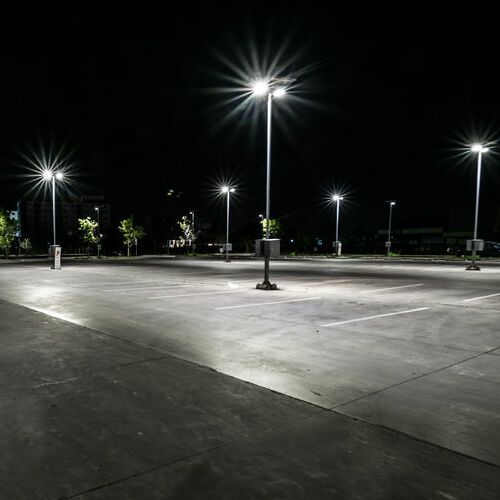
An Empty Well-Lighted Parking Lot

Parking lot lighting installation near me

If you have a business and need new parking lot lighting installed or repaired in Dallas and Fort Worth, TX, let the professionals at Majestic Outdoor Lighting take care of all your outdoor lighting needs. We offer a wide range of business and commercial lighting options from parking and security to decorative lighting. Find out how we can help by calling (817) 345-3696.
How do you cool a covered patio?

patio misting

Do patio misters work?

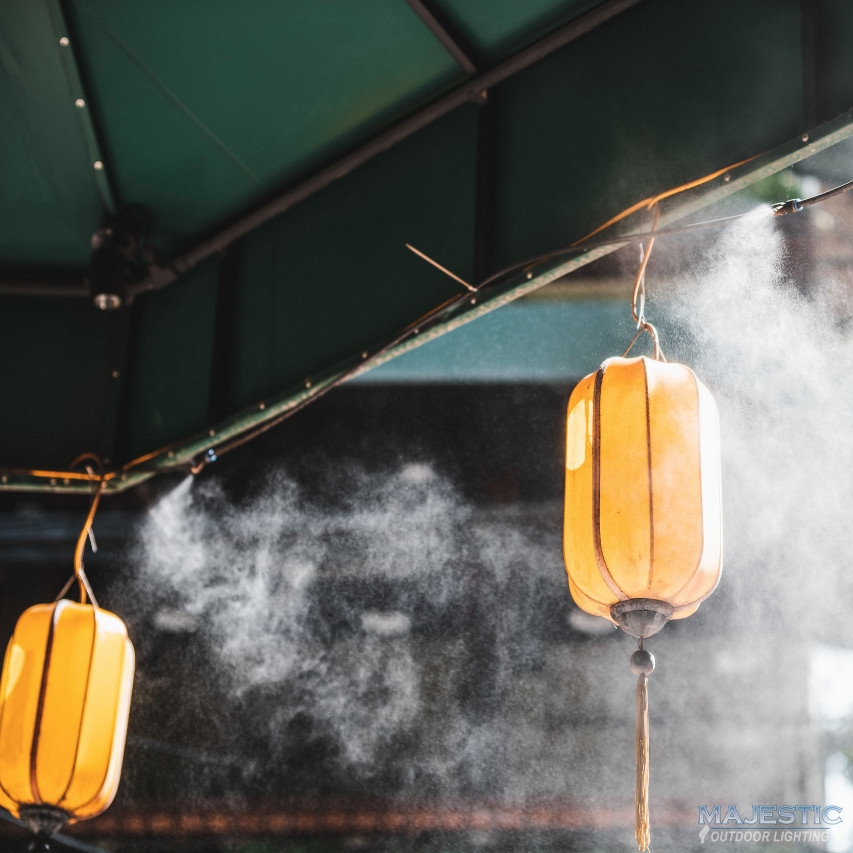
For homeowners in Dallas and Fort Worth, TX and the surrounding areas, shade tends to not do much to stave off the summer heat. An easy way of improving your patio and enjoying the outdoors in the summer is with the installation of a patio misting system. Whether you just got done gardening, finished a harsh workout, need a break from tanning, or any other outdoor activity, patio misting can enhance the experience with a refreshingly comfortable place to rest outside. The systems themselves work in a way that can be considered similar to the natural process of cooling down a region. With misters spreading out water particles into the air and evaporating the moisture into the heat. This creates a relatively humid environment that is cooler thanks to the moisture and shade.

A misting system installed into your outdoor patio operates by being fed water through a small nozzle or hose and dispersing it through the air onto those within its range. The particles thereby naturally spread out and get carried by the airflow from the home as well as the natural breeze. Low-pressure misters operate in similar regard, needing a pump to make the cool mist truly effective. One of the best parts of the system is also the mist is not unnaturally cooled, only going by the temperature that comes through your waterline, which generally is naturally cold thanks to moving through the piping. Majestic Outdoor Lighting in Dallas and Fort Worth, TX can install the system onto your patio when you call (817) 345-3696 today to schedule your appointment.

Do you need a pump for a misting system?

Unlike the low-pressure system, most patio misters need a pump to operate to any measure that would be considered effective. This is due to regular misters having a different design when it comes to dispersing water droplets. They need more pressure, which a pressure pump easily provides when feeding water into the system. While visibly there may not be much difference between the regular and the low pressure, the patio misting provided by the former is far more spread out with finer droplets released from the device. 

By and large, the brunt of the price for most patio misters comes in the water pressure pump. After that, patio misting uses relatively little water compared to other water-related systems in the normal household. To put it in another way, a patio mister uses significantly less water than your air conditioner a large margin.

Do misters keep mosquitoes away?

For Texans and southerners in general across the United States, bugs like mosquitoes are a problem. However, when a property owner installs patio misting insects steer clear of the misted area. The reason is due to that insects have more trouble flying in mist than they do in dry air. When their wings are weighed down by the water droplets, insects then sink to the ground and have to move in the open until their wings dry. Patio misting in that sense is also effective against insects like wasps, house flies, yellow jackets, and more. Instead of using toxic methods to get rid of pests that come after you when you relax outside, patio misting offers a method of keeping everything healthy by making an area that annoying insects actively avoid.

While pato misting feels great, they can damage wooden structures and paint when not properly installed. However, this can be easily avoided by suitable placement where the moisture will not build up on the wooden or painted surface. Also seek out openings in wooden structures that would be an entry point for moisture among other threats like pests. These spots should be covered to prevent rot from occurring inside the wood and make it structurally inept. Furthermore, keep your eyes peeled for the buildup of mildew or mold. When caught early, both can easily be cleaned with a small amount of soap and water.

patio misting

What are the Three Main Types of Mist Systems?

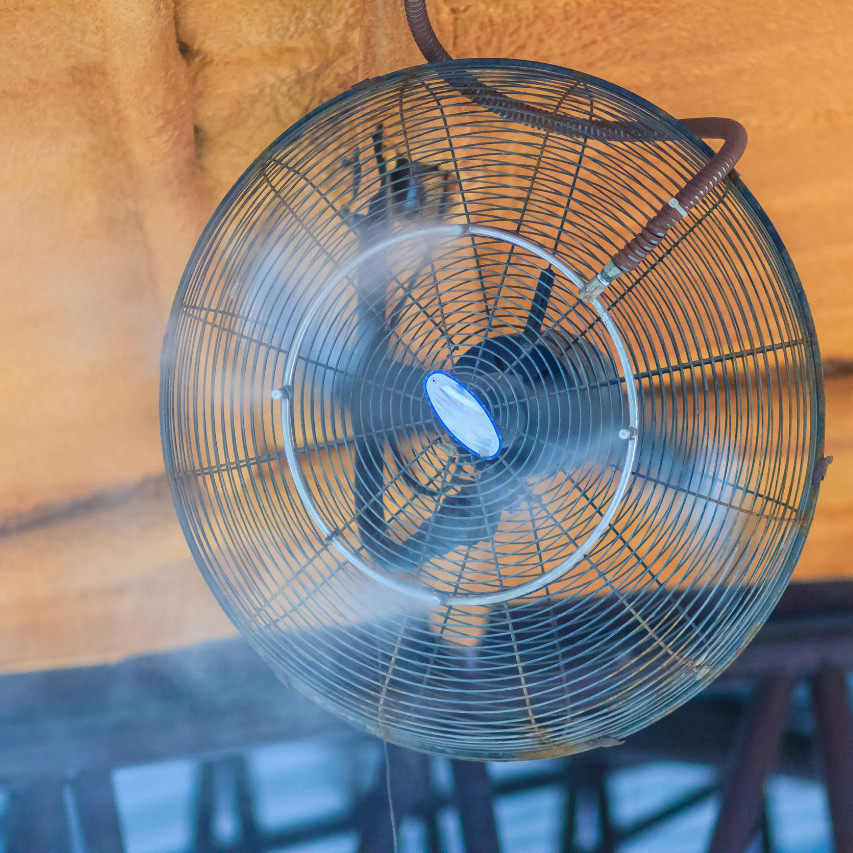
There are actually several types of mist systems that provide a spread out of water droplets to either cool an area. However, the three types of patio misters are defined by low, medium, and high pressure dispersion. From low to high, the capabilities of each system increase with low pressure patio misters being the least expensive and easiest to install to the high pressure patio misters being capable of higher pressure as well as output while being more expensive. The same system applies when it is a misting system built into a fan, with there being more output for a higher cost into the system. A caveat of this, however, is that lower pressure systems tend to be defined by being wetter due to that they are building up more moisture in a smaller area and not spreading out the output. The best system should be defined by the space it is in, with a patio misting system of moderate size being for a moderate-sized area. Majestic Outdoor Lighting can help with this decision for homeowners in Dallas and Fort Worth, TX. Call (817) 345-3696 today to schedule your appointment for a patio misting system installation.

Why is LED lighting better?

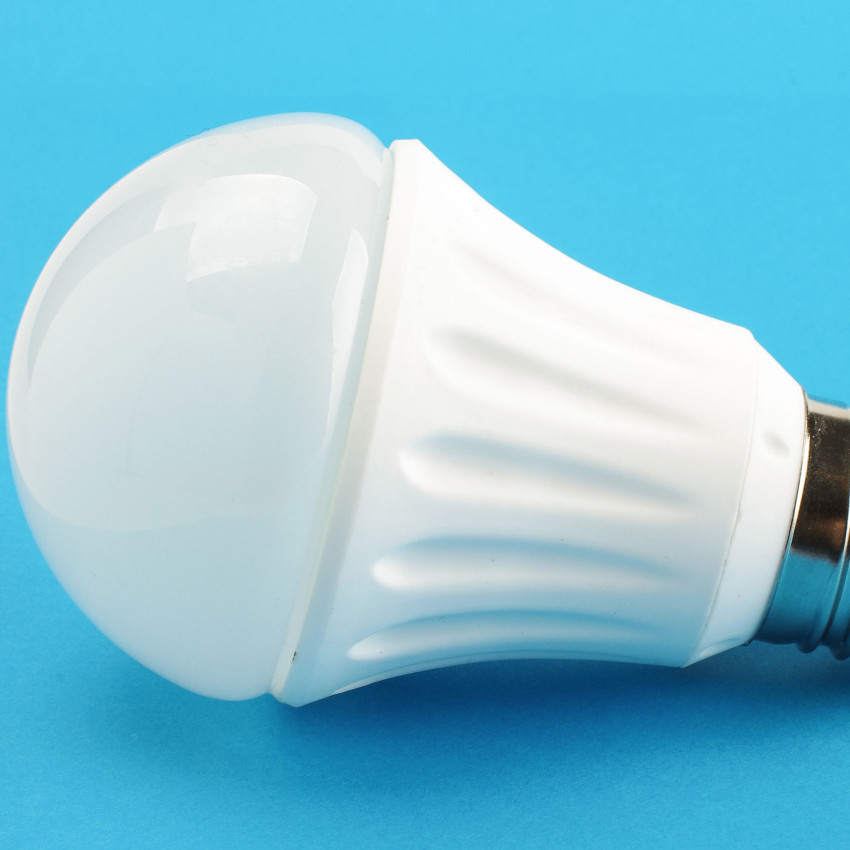
LED light

What Does LED Mean in Lighting?

Everyone is always looking for the next way to save themselves some money and improve their own home. When it comes to putting lights into your home, LED lighting can give you an entirely better system to keep your home lit while you enjoy more advantages than a traditional lighting system is capable of. LED lights, or light emitting diode lights, work differently to regular light bulbs and floodlights. Thanks to the diodes built into them, LED lighting presents itself as the modern form of lighting with several advantages held over the traditional options. In a smaller, compact form, it has the capacity to be brighter and longer lasting than any other option on the market.

Since their invention in the early 1960s, then gaining traction in the 1980s, LED lighting has only improved by being made more efficient while their lifespan has been lengthened to the point of outlasting the competition. Whether you need string lights on a single circuit, floodlights, lamp lights, LED lighting will serve to only improve your experience. When living Dallas and Fort Worth, TX get a company that you can trust when getting LED lighting. Majestic Outdoor Lighting can get the job done with our lighting experts that have years of experience in serving the community. Call (817) 345-3696 today to set up an appointment for LED lighting.

Do LED Lights Really Save Money?

It cannot be stressed how energy efficient LED lighting is compared to the traditional options. Comparatively, a ten watt LED bulb can give the same amount of output as a sixty watt incandescent light bulb. To be sure, the benefits of LED lighting also overtake the disadvantages by a wide margin. While having a higher upfront cost, the bulbs make the cost back up by having an average cost of twelve cents for every kilowatt used per hour. To put it in another way, it will only cost you thirty dollars by the time it runs for twenty-five thousand hours. Additional advantages also include:

  • Household lighting efficiency 
  • Low maintenance 
  • Environmentally friendly
  • Lack of produced heat
  • Minimal power consumption
  • Brighter
  • Long lifespan

LED lighting tends to beat out any competition thanks to their amazingly long lifespan that can go up to a hundred thousand hours, generally lasting for years of regular use without having to be changed. Many customers also sing the praise of the lights with their multiple options in color and shape. Often producing a softer form of light than what comes out traditionally from other kinds of light. While there are various types of LED bulbs across various industries, it is easy to find just the one you need for a longer lasting and more efficient light source.

Why are LED Lights so Bright?

There are various misconceptions and myths surrounding LED lighting that often steer away those that would enjoy the benefits they can provide. The truth is, any person that stares at a light bulb or a source of light will be a victim to some sort of health malady. The reason is that many people often do not realize that LED lighting is far brighter at the same wattage than traditional lighting. The problem then persists when there is no method to dim the installed light bulbs. Now, the most common myths that have to do with that and plague this modern form of lighting tend to be as such:

  • Are LED lights safe for human eyes?
  • Do LED lights give people headaches?
  • Can LED lights work in the cold?

Many have risen up to answer these questions without any sort of knowledge to back up their claims affirming that gives LED lights a negative connotation. However, these questions can be easily answered with only a minor amount of knowledge on the subject. All lights, as mentioned, can have a negative effect on a person’s eyes if a person has to spend a significant amount of time with the source in their view. LED lights are in fact safe for a person’s eyes in normal circumstances just like any other type of light. On the accusation of LED lights giving a person headaches, there is a bit of an explanation behind that. When a regular light turns off and on quickly, it only goes down to thirty percent light output before reverting back to full output. LED lighting shuts off completely and all the way back on, causing an interruption to the light source reaching your eyes. When there are interruptions to the light reaching the eyes, that can give you a headache and should be investigated when there are flickering lightbulbs. The problem is more than likely never occur because of the lightbulb. When installed in cold climates, modern LED lighting turns on effectively just as it does in warm settings.

LED lighting

What are the Different Types of LED Lights?

Just as there are various kinds of traditional light bulbs, there are various kinds of LED lights that can fit whatever a person needs in terms of a light source. While the industries that make multiple kinds of LED lighting are not necessarily united, that does not mean you are left hanging when needing something specific in your lighting needs. The various kinds of LED lights include: 

  • Specific purpose
  • Miniature
  • Floodlight
  • Colored
  • Vehicular

The list goes on in terms of what you can get when it comes to LED lighting. You can install them into your car, your home, a flashlight, they have become a widespread modern lighting solution. Trust a lighting company that have become experts in them when in Dallas and Fort Worth, TX. Call Majestic Outdoor Lighting at (817) 345-3696 today to schedule your appointment.

Garden Lighting Design

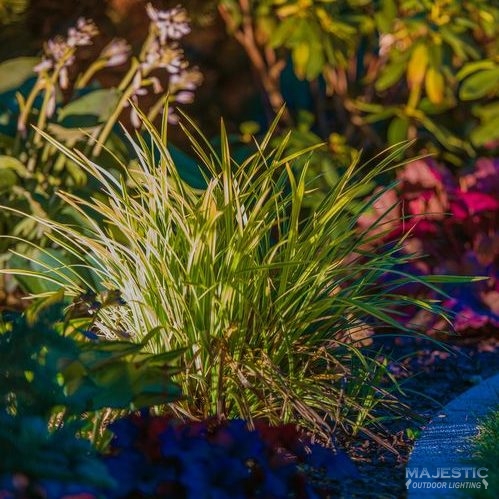
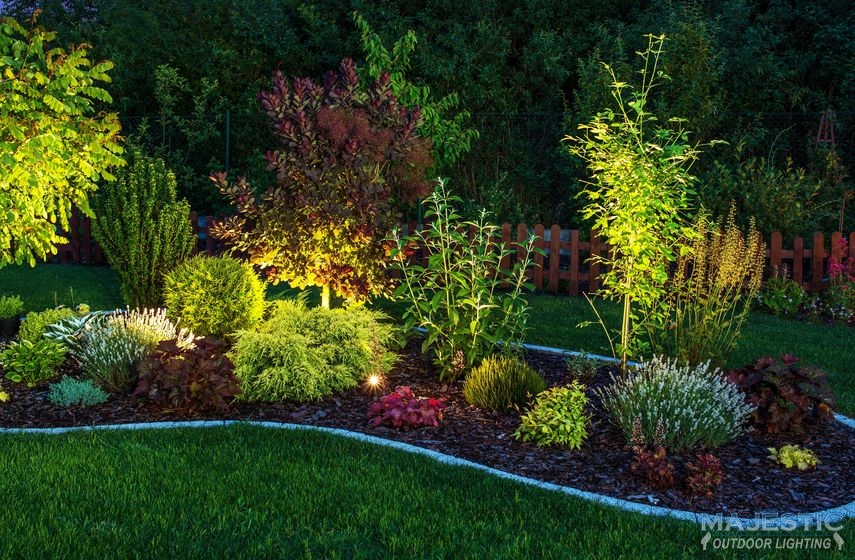
Garden Night Time Lighting. Illuminated Garden Plants.

Have Fun With Garden Lighting

With spring coming around the corner you may be wondering how best to accent the new blooming flower beds or other foliage that graces your landscaping. Garden lighting is a popular way to spruce up the look of landscaping and freshen up the atmosphere. It can provide a sense of wonder and mystic during the night and highlight particularly especially attractive areas of the landscape. There are many ideas you can make a reality, here is some helpful information that may prove useful to you with your garden lighting projects. If you’d like to have the help of professionals guide you through the process contact your local outdoor lighting company for more information.

Where should outdoor lights be placed?

Outdoor lights can essentially be placed wherever you want them to be placed yet some logistics should be considered. First, you’ll want to decide what areas or objects you wish to be lit and then you can search for the lighting techniques that typically people choose as most successful. Garden lighting for flower beds, for example, may have different recommendations than those for say a patio. Depending on the effect that you desire to give you’ll also choose the appropriate features, accessories, the right power supply, and bulbs. 

How many lumens does a garden light need?

Garden lighting can have a range of 12-1300 lumens depending on where they are placed. Path and step lighting are typically best at 100 lumens while flood and motion sensor lights best recommended at 700 lumens. General landscape lighting can be around 50-300 lumens (based on preference,) wall lights from 50-185 lumens and underwater lights from 200-400 lumens.

How do you use garden solar lights?

If you’re installing solar lights for your garden lighting keep placement in mind as they will need ample exposure to sunlight during the day in order to charge up on energy to work well into the night. As far as installation, simple steps to follow are to first install foundation stakes for the lights to go into the ground, then attach the light posts and position the remote solar panels.

Illuminated Garden by LED Lighting. Backyard Garden at Night Closeup Photo.

Garden Lighting Design Tips

  • Have Lighting come from overhead.
  • Low wattage, low voltage is recommended.
  • Use garden spotlights sparingly.
  • Avoid glare from one light source by having many smaller lights.
  • Illuminate solid objects rather than thin, skeletal ones.
  • Make use of light-colored or reflective surfaces for added illumination. 
  • For more of a dynamic add garden lighting accessories.
  • Get economical in bulk design with garden lighting kits.

How do I light my garden?

Garden Lighting Design Guide

There are many ways that you can improve upon the design of your garden yet here are some tips that may make for a great result. Keep the fact that natural light will always be present and will come from above. Therefore, the bulk of your lighting should come the same direction overhead, the higher the better. You can use low wattage flood lights for most of this with bulbs no bigger than 100 watts, you might also consider low-voltage lighting as well. Garden spotlights should be used sparingly and to highlight interesting features or landscape details. When highlighting large flower beds or other planting areas it’s better to use a number of smaller lights in order to create a series of softly overlapping pools of light rather than a single large unit. For any light fixtures follow the manufacturer specifications to see what the max wattage should be used but keep in mind smaller bulbs are often adequate. Solid objects rather than thin, skeleton-like structures should be illuminated so avoid bare trees, open trellises, and similar areas. Make full use of light-colored or reflective surfaces in your lighting scheme to extend the source of illumination by reflection and diffusing rays over a wide area. Consider adding accessories to your garden lighting like interesting lamp shades or playing with color hues. For economical endeavors, there are many garden lighting kits out there that can sell a pack of light stakes or fixtures which can make for a more convenient process of design. To seek more of an impact for your garden lighting consider reaching out to a professional for design tips. Ultimately, any way that you provide lighting to your landscape will create an illuminating effect that’s pleasing to the eye to all who look upon it.

If You’d Like Garden Lighting Design Help Contact A Professional

These are just a few ways that you may implement design elements for your garden lighting. The options are all flexible in accordance with your design preferences and can make for an attractive outcome no matter what you choose to go with. If you’d like the assistance of a professional with your garden lighting endeavors, reach out to your local outdoor lighting company for guidance. Garden lighting at night can create a magical effect in highlighting the landscape and is a fun way to enjoy the wonder of your garden with ambiance. Get your project underway soon!

If you’re interested in garden lighting in Dallas and Fort Worth, TX call (817) 345-3696 with Majestic Outdoor Lighting! 


It Was a Pleasure Serving You!


×